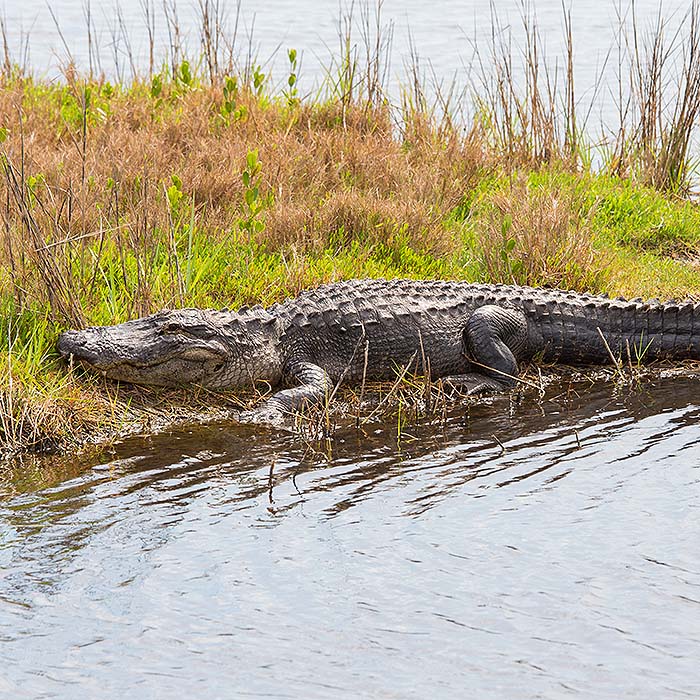
The Key West Aquarium is home to three juvenile American alligators (Alligator mississippiensis), one of Florida’s most iconic and misunderstood animals. Our juvenile ambassador alligators are here through a borrowing partnership with the Everglades Alligator Farm as part of a conservation education program. All three baby alligators were born at the Everglades Alligator Farm in Homestead, Florida.
The American alligator, Alligator mississippiensis, is a large aquatic reptile and one of two crocodilian species native to Florida. Members of the alligator family first appeared more than 35 million years ago. There has been very little evolutionary change over the last 8 million years, making them living fossils. Today, only two true alligator species exist in the world: the American alligator and the Chinese alligator.
Alligator Fast Facts
Size: Adults typically grow 8-12 feet long, females rarely exceed 10 feet, but some males reach over 13 feet and weigh over 1,000 Ibs.!
Lifespan: 35-50 years in the wild.
Diet: Opportunistic carnivores – feeding on fish, turtles, birds, and small mammals.
Reproduction: Mature at 7 feet, females make a mound nest and guard it until the babies hatch. Offspring may stay with their mother for up to 3 years.
Bite Force: Large adults – 3,000 per square inch (PSI).
Teeth: Regrow lost teeth, up to 4,000 in a lifetime.
Ectothermic: Cold-blooded; body temperature is controlled behaviorally by basking with the mouth open to warm up and seeking shade or the water to cool down.
Living Fossils: Very little evolutionary change over the last 8 million years.
Geography
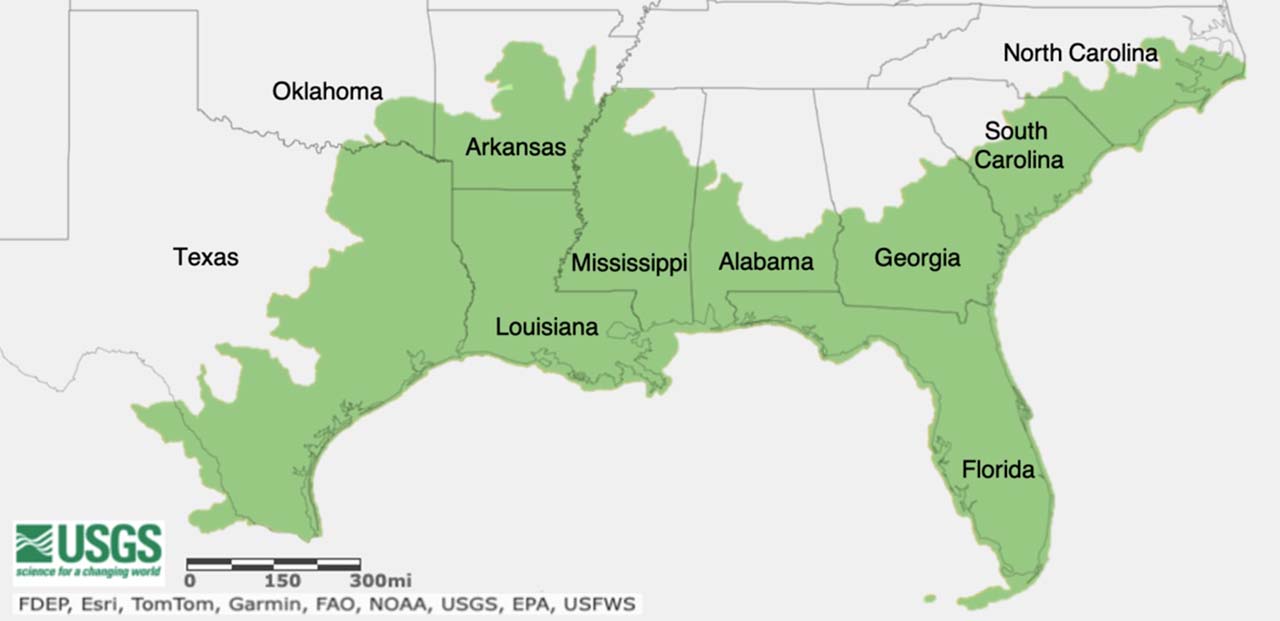
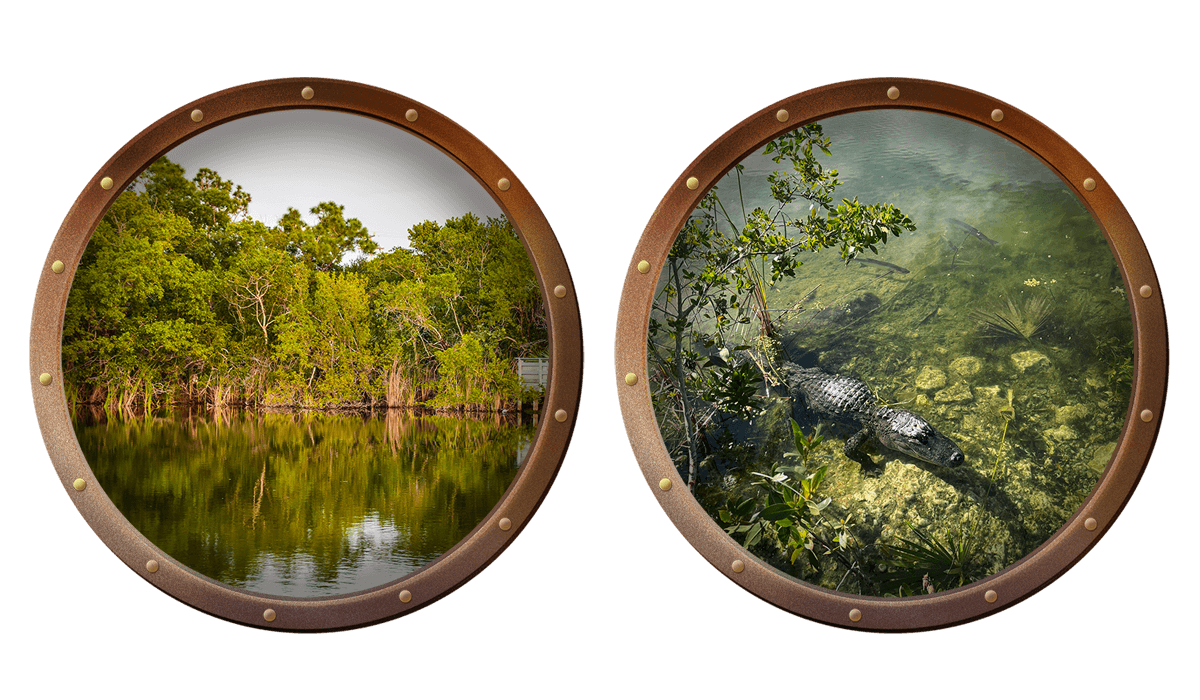
American alligators are found throughout the southeastern United States, ranging from the Carolinas to Texas and north into Arkansas. The largest populations occur in Florida, southern Georgia, and Louisiana. They inhabit swamps, marshes, lakes, and slow-moving rivers, and although they are primarily freshwater animals, they can tolerate brackish environments in some regions. Here in the Florida Keys, you can visit the Blue Hole in Big Pine Key—a former quarry filled with freshwater—as it is home to several resident alligators. South Florida is unique because it is the only place in the world where both the American alligator and the American crocodile live together in the wild.
Carnivores
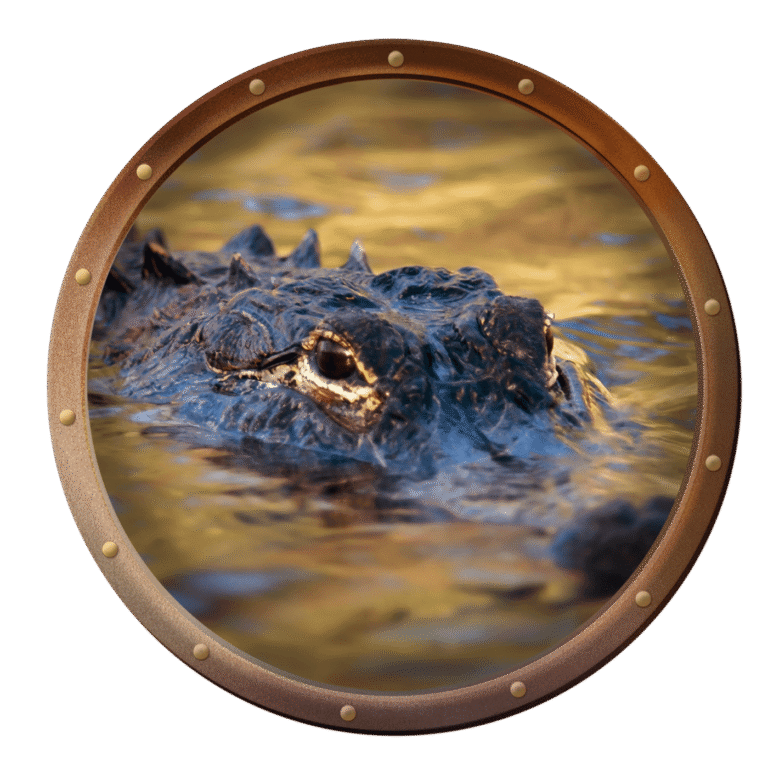
Alligators are carnivores and primarily hunt at dusk or at night. They are ambush predators, lying motionless in the water with only their eyes and nostrils exposed. Their diet includes fish, frogs, birds, turtles, snakes, insects, small mammals, and occasionally other alligators. Prey selection is largely determined by size and opportunity. Juveniles eat primarily insects, amphibians, and small fish. Their jaws are among the strongest in the animal kingdom, capable of crushing turtle shells and breaking bones. (Fun Fact: The bite force of an alligator can reach up to 2000 pounds of pressure per square inch; for comparison, a human has a bite force of roughly 120 pounds of pressure.) However, the muscles that open the jaw are relatively weak. Alligators swallow prey whole, and a special flap in the back of the throat prevents water from entering their lungs while hunting underwater.


In water, alligators propel themselves using powerful side-to-side movements of their muscular tails, assisted by partially webbed feet. Though exact swimming speeds vary, they have been recorded moving at impressive speeds. On land, they can run up to 9 miles per hour over short distances, although they tire quickly.

Alligators are considered keystone species, meaning their presence has a disproportionately large impact on their environment. As top-level predators, they help regulate populations of their prey, including fish, turtles, birds, and small mammals, thereby maintaining ecological balance.
Beyond predation, alligators physically shape their environment. By digging depressions known as “gator holes,” they create pockets of water that remain during dry seasons. These water refuges become critical habitats for fish, amphibians, birds, and invertebrates. They also excavate dens for their young into stream banks, providing protection from cold weather and safe shelter year-round. Without alligators, wetland ecosystems across the Southeast would look very different.

Nearly all alligators reach sexual maturity at about 7 feet in length. Males grow significantly larger than females. Females reach up to 10 feet in length, whereas the males have been known to reach up to 14 feet in length!
Breeding season typically occurs between mid-April and May. During courtship, males perform dramatic head-slapping displays and produce deep, rumbling bellows that can vibrate the water’s surface. Males and females may swim together, touch snouts, and blow bubbles before mating in the water.

After mating, the male departs, and the female constructs a nest mound made of vegetation and mud near the water’s edge. She lays between 20 and 50 eggs per clutch and covers them for incubation, which lasts about 65-70 days. Remarkably, the temperature of the nest determines the sex of the hatchlings. Lower temperatures produce females, higher temperatures produce males, and intermediate temperatures yield roughly equal numbers of females and males. When the hatchlings are ready to emerge, they make high-pitched yelping or chirping sounds to signal to their mother, who uncovers the nest and may gently carry them to the water. Females reach reproductive maturity at around 10 years of age.


Alligators vs Crocodiles
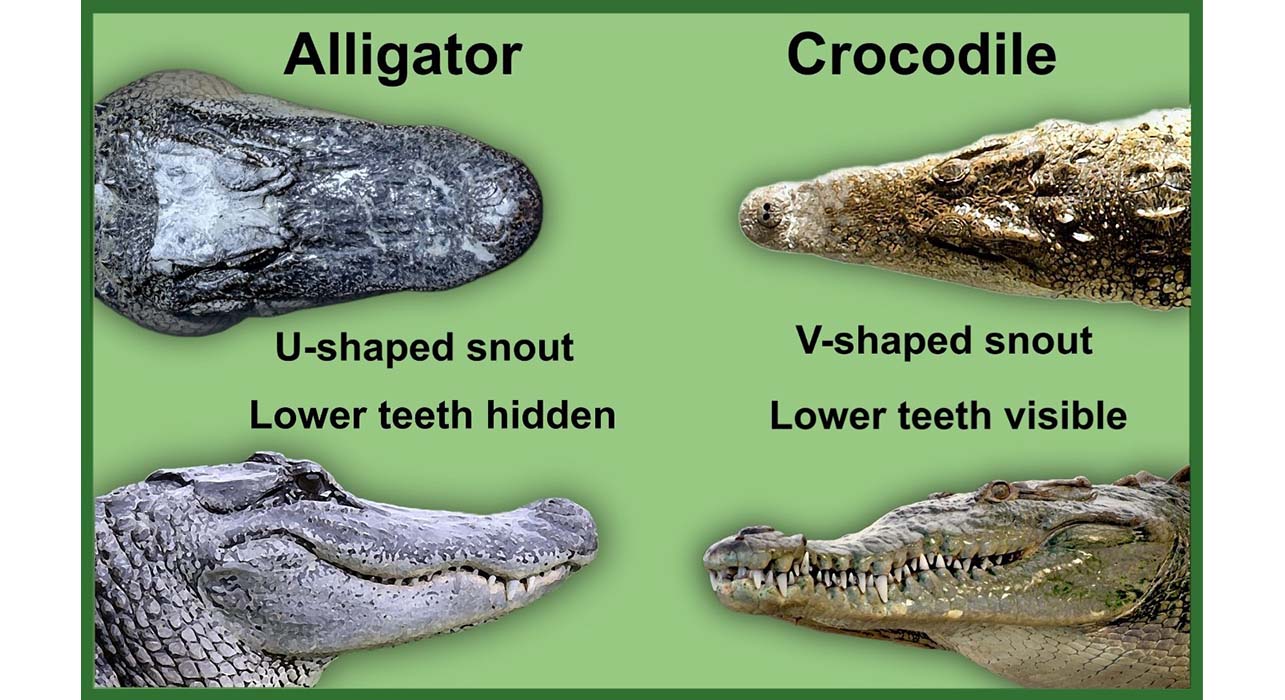
Though often confused, alligators and crocodiles have clear differences. Alligators have a rounded, U-shaped snout, and when their mouths are closed, their lower teeth are mostly hidden. Adult alligators are dark-colored, ranging from blackish-grey to olive or brown, featuring a creamy, light-colored underside. The juveniles are dark with yellow stripes, which fade as they get older. They prefer freshwater habitats but may enter brackish water and rarely saltwater.
Crocodiles have a narrower, V-shaped snout, and when their mouths are closed, the teeth remain visible, especially the fourth mandibular tooth, which locks into a notch in the upper jaw. The American crocodile is more closely associated with saltwater and brackish coastal habitats in extreme southern Florida and is less abundant and more secretive than alligators. Crocodiles are generally larger in size, with some species reaching nearly 20 feet long!
History and Ranching
Alligators were heavily exploited from the late 1800s due to unregulated hunting for their hides and meat. By the early 1960s, their numbers had dropped so drastically that they were listed as endangered. Protection under the Endangered Species Act of 1973, along with strict management of hunting and trade, allowed populations to recover. Today, the American alligator is considered one of the greatest wildlife conservation success stories in the history of the United States. Current wild population estimates range between 2 and 3 million individuals. Through regulated harvest programs, habitat protection, and ongoing surveys and monitoring, wild alligator populations remain stable and, in many areas, continue to increase. Alligator ranching, which was developed in the 1980s, also contributes to conservation. Ranchers collect eggs from wild nests, raise hatchlings in controlled environments, and return a percentage to the wild. Farming and captive breeding programs produce approximately 20,000 hatchlings per year. Sustainable use of alligators in the United States generates more than $70 million annually at the production level, demonstrating that conservation and economic interests can work together.
Alligators and People
As Florida’s population grows, encounters between humans and alligators become more common. Habitat loss due to agriculture, residential development, pollution, water diversion, and saltwater intrusion remains among the main long-term threats to the species. Extensive surveys and monitoring programs ensure that alligator populations remain stable. While the species is well studied compared to other crocodilians, researchers continue working to better understand wild population dynamics and improve captive breeding and husbandry techniques. The most important rule is simple: never feed wild alligators. Feeding causes them to lose their natural fear of humans and associate people with food, increasing the risk of conflict. Always keep a safe distance and respect wildlife’s space. The American alligator is not only a powerful predator but also a symbol of resilience and successful conservation. By learning about and respecting this remarkable reptile, we help ensure that it continues to thrive for generations to come.

Alligators at the Key West Aquarium FAQS
The Everglades Alligator Farm was originally established in 1982 as an airboat operation, providing visitors with rides into the Everglades to see wild alligators.
In 1985, it received approval to breed American alligators commercially for release into the wild, helping conserve the species. This captive breeding program, and others like it, have helped the population of wild alligators rebound from the brink of extinction to over 1 million in Florida. The Everglades Alligator Farm now focuses on caring for nuisance alligators, taking in animals that have run afoul of humans and would otherwise be euthanized. They still have a limited breeding program and share alligators with other licensed facilities for use as educational ambassadors.
Adult American alligators can grow to 8-12 feet long, but rarely exceed 10 ft. In exceptional cases, males can grow to over 13 ft. long.
We will care for this set of alligators until they reach 3-4 ft. Once they have outgrown the exhibit, they will be returned to the Everglades Alligator Farm, where they will either be placed in the grow-out habitat or transferred to another educational facility with space for them. We will then get 3 new babies!
Our alligators have rubber caps on their back toenails, the same kind put on cats’ and dogs’ nails to prevent scratching. The colored caps are a non-invasive, semi-permanent way for us to quickly tell them apart during training, when recording how much they eat, or when performing health checks.
Cheeto (red toes), Frito (yellow toes), and Dorito (blue toes).
We believe that all three alligators are female, but it is hard to know for sure when they are so young. There is no obvious outward difference between male and female alligators, but a preliminary exam by our vet suggests that they are female.
Alligators have a very strong bite, even when they are small. They have very powerful jaw muscles for closing their mouths, but weak ones for opening them. We wrap flexible electrical tape or a soft velcro band around the alligator’s snout as a safety precaution. It is for our safety and the animals’ safety. The tape is strong enough to keep the jaws closed but doesn’t stick to the alligator’s skin or harm them in any way. This is a standard industry practice when working hands-on with alligators and other crocodilians.