The Florida Reef Tract is the third-largest barrier coral reef system in the world. Locally, it is classified as a bank reef due to its proximity to the shore and the absence of a deep coastal lagoon.
Welcome to the sun-drenched waters of South Florida, where aquatic wonders thrive just beneath the surface. Many of the travelers who come here love exploring the natural wonders that make our destinations famous. The local waters contain a vibrant ecosystem, supporting thousands of species. Marine life in the Florida Keys thrives across interconnected coastal zones, creating a sanctuary for sea creatures.
Introduction to the Florida Keys Marine Ecosystem
Understanding marine life in the Florida Keys requires analyzing its geographic position. The island chain rests at a biological convergence zone where the deep ocean currents of the Atlantic Ocean meet the shallow waters of the Gulf of Mexico. This dynamic mixing creates a hyper-biodiverse region. Over 500 individual species of fish and hundreds of aquatic invertebrates call these waters home.
Running parallel to the archipelago is the Florida Reef Tract. Spanning 358 miles from the St. Lucie Inlet down to Dry Tortugas National Park, it stands as the third-largest barrier coral reef system on Earth. Local geologists classify it as a bank reef rather than a traditional barrier reef because it lacks a deep lagoon separating it from coastal landforms. Marine life in the Florida Keys relies directly on the stability of this bank reef structure.
Critical Marine Habitats and Ecosystems
The archipelago features three primary marine ecosystems that work together to shelter, feed, and protect aquatic organisms.
A. Coral Reef Systems
- Stony Corals (Hard Corals): Hard corals are the structural engineers of the reef tract. They secrete calcium carbonate skeletons that form massive limestone bases over centuries. Essential reef-building species include staghorn, elkhorn, brain, and star corals. Human impact, pollution, rising sea temperatures, and water acidification have driven a 90% decline in indigenous hard coral cover since the 1970s. These reefs provide critical habitat for fish species, protect coastline communities from ocean erosion during severe hurricanes, and power local diving and ecotourism economies.
- Gorgonians (Soft Corals): Composed of flexible gorgonin proteins reinforced with microscopic calcite spicules, soft corals do not produce rigid limestone bases. Dominant local variants include purple sea fans, sea plumes, and corky sea fingers. As hard coral coverage has decreased, soft corals have occupied available hard surface area, providing food and habitat for small organisms without reinforcing the physical strength of the reef.
- More on coral reefs below.

B. Mangrove Shorelines
- The Three Species: The coastal edge is anchored by red, black, and white mangroves. Red mangroves (Rhizophora mangle) dominate the immediate shoreline along the 1,700 islands that make up the Keys chain.
- Natural Nursery and Defense: Red mangroves utilize specialized aerial prop roots that filter salt out of seawater. These dense root networks form an aquatic nursery where juvenile fish, crustaceans, and larvae shelter away from apex predators. They also break wave energy, controlling shoreline erosion during major storms.

C. Seagrass Meadows
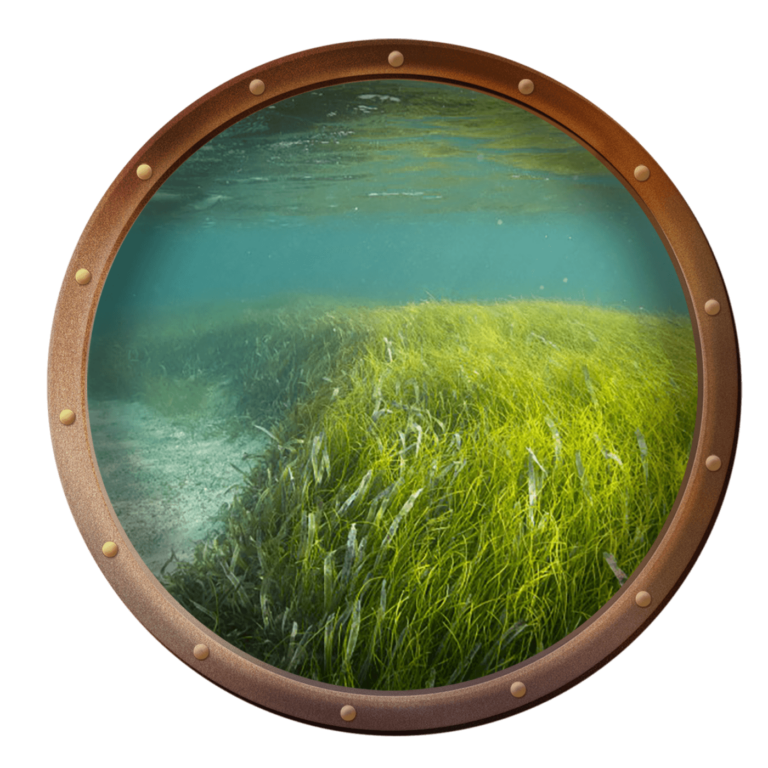
- Underwater Meadows: Fertile expanses carpet the calm, shallow bays. Of the 52 global seagrass varieties, seven grow in Florida waters, led by turtle grass, manatee grass, and shoalgrass. Florida features roughly 2 million acres of submerged seagrass.
- Ecological Integrity: Seagrass beds trap loose organic sediment to maintain high water clarity. Their extensive root networks anchor the sea floor, while green leaves serve as vital foraging grounds for marine life in the Florida Keys.

Habitat and Biodiversity
The coral reef serves as a primary home and nursery for thousands of marine species. Complex coral structures offer shelter, breeding grounds, and foraging territories for invertebrates, sea turtles, schooling fish, and apex predators. Without the structural complexity provided by living hard corals like elkhorn and brain coral, the vast majority of local marine life could not survive in these open waters.
Coastal Protection and Storm Defense
Beyond supporting marine life, the reef tract acts as a natural protective barrier for the entire island chain. During major ocean storms and hurricanes, the massive physical structure of the reef absorbs wave energy before it reaches the coastline. This natural defense buffer drastically reduces shoreline erosion and protects coastal infrastructure, low-lying habitats, and historic neighborhoods from severe wave damage.
Economic Impact and Local Tourism
The local economy in Key West relies directly on a healthy coral reef system. Ecotourism activities like reef snorkeling trips, scuba diving charters, glass-bottom boat tours, and recreational fishing draw visitors from around the world. Commercial fishing and local seafood markets also depend on healthy reef habitats to maintain stable populations of game fish and culinary staples. The Florida Keys depend on the reef, making local marine stewardship and habitat conservation vital to our way of life.
Iconic Reef Fish Communities
The reef ecosystem supports thousands of species filling specialized niches across the water column.
A. The Ecosystem Caretakers
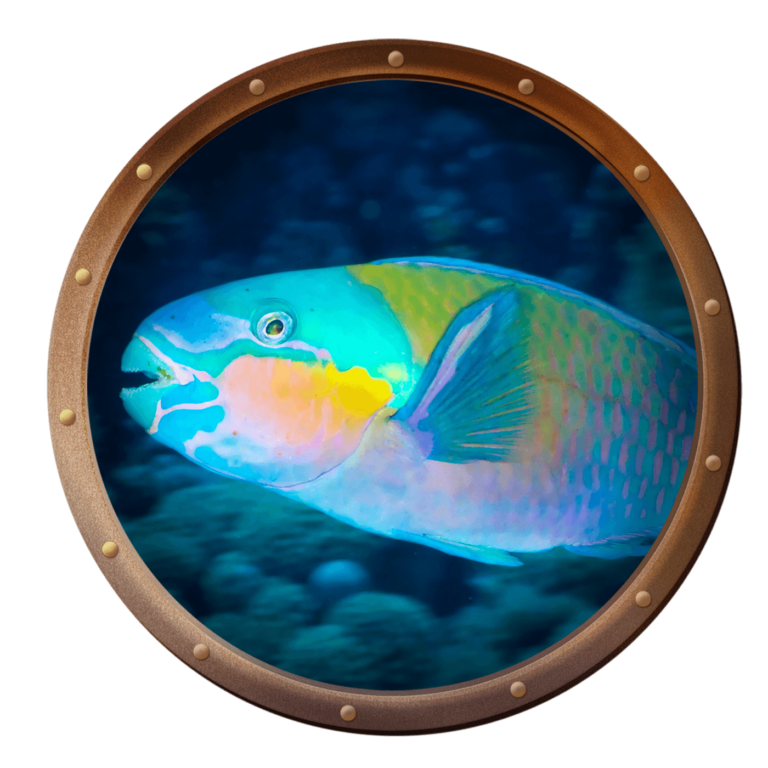
- Parrotfish: Recognized by their bright coloration and fused teeth forming a birdlike beak, parrotfish scrape suffocating algae off coral tissue. As they digest scraped limestone, they excrete fine coral sand, supplying the white sand beaches of the region. Major varieties include rainbow, midnight, blue, and stoplight parrotfish.
- Damselfish: Small, high-energy territorial fish that defend specific coral outcrops. The sergeant major damselfish features distinctive black and yellow vertical stripes, swimming in tight, protective groups.
- Wrasses: The wrasse family includes over 600 species globally. These agile swimmers often operate cleaner stations along the reef, where they pick parasites and dead tissue off larger fish. This mutualistic relationship directly supports the biodiversity of marine life in the Florida Keys.
B. Swimmers in the Shallows
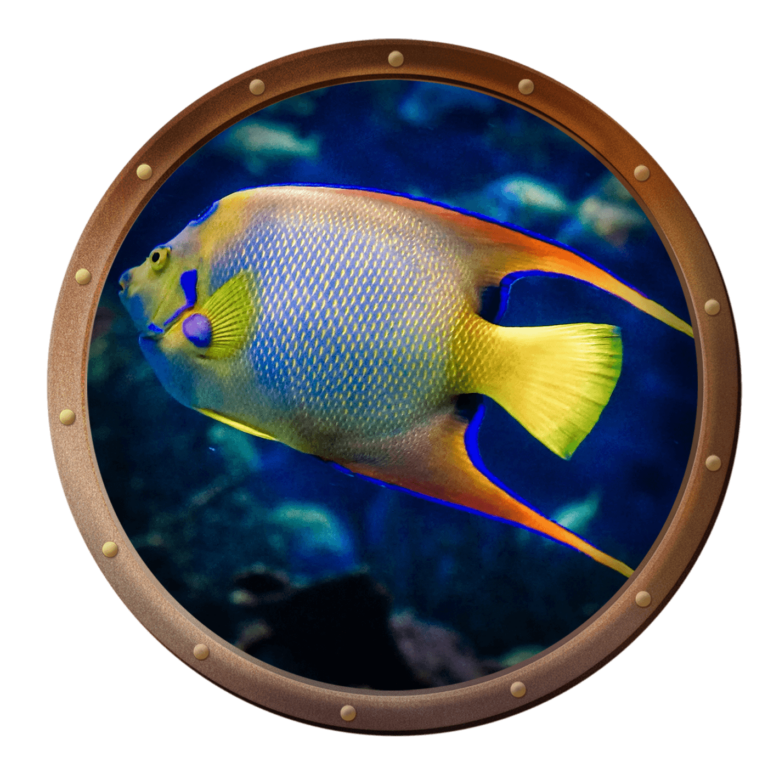
- Queen Angelfish: Featuring an electric-blue and yellow body with a circular crown ring on its forehead, the queen angelfish inhabits depths down to 230 feet. Queen angelfish are protogynous hermaphrodites that reproduce through broadcast spawning in pairs or small harems. They feed primarily on sponges, preventing sponge overgrowth on stony corals while recycling ocean nutrients.
- Blue Angelfish: Displaying a blue-gray body structure with yellow fin borders, blue angelfish resemble queen angelfish but lack the forehead crown, presenting only a faint blue smudge. Blue and queen angelfish occasionally interbreed, producing hybrid offspring.
- Butterflyfish: Smaller relatives of the angelfish, measuring between 12 and 22 centimeters. Butterflyfish utilize disruptive camouflage, using bold stripes and false eye spots to confuse predators regarding their direction and size. Many butterflyfish form long-term monogamous pair bonds.
Predators and Sport Fish
Fast, highly adapted predatory fish roam deeper reefs and coastal channels throughout the archipelago.
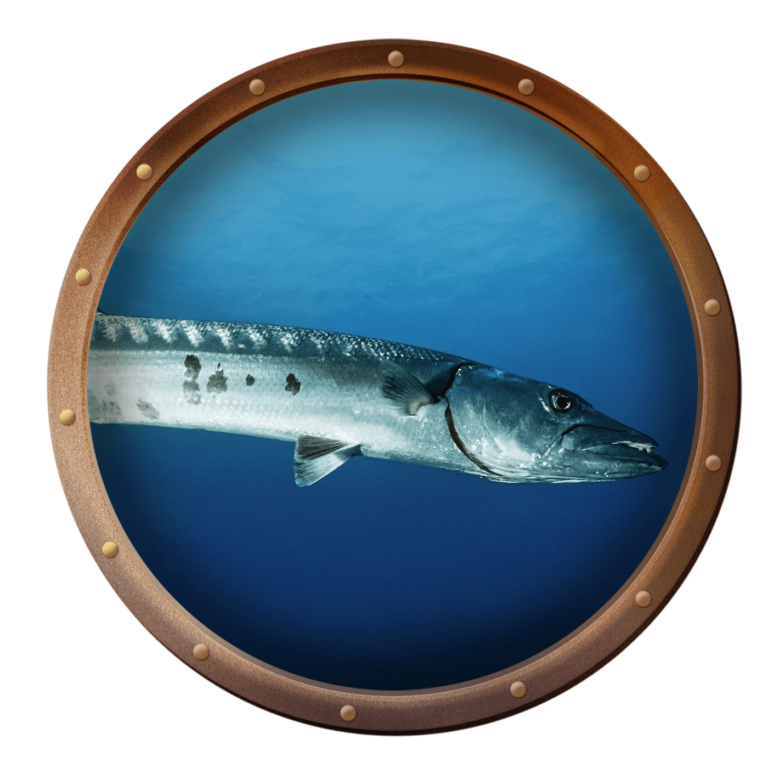
- Barracuda: Long torpedo-shaped silver predators equipped with large teeth, barracudas use their sleek profile to ambush prey, often hovering motionless in the water column. While barracudas are sight predators and inquisitive by nature, the instances of unprovoked attacks on humans are extremely low. Most often, they are associated with spearfishing. Shiny objects may catch the attention of these fish, but they are unlikely to go after a person. Barracudas use their body shape and coloration to ambush prey, hiding in plain sight in the water column. They have a habit of hovering in the water and not immediately swimming away from people, which can be startling or unnerving, but that does not mean that they are threatening. It is a good practice to remove jewelry and watches before entering the ocean because saltwater is corrosive, and the pressure changes while diving making it more likely that rings will fall off as fingers are compressed.
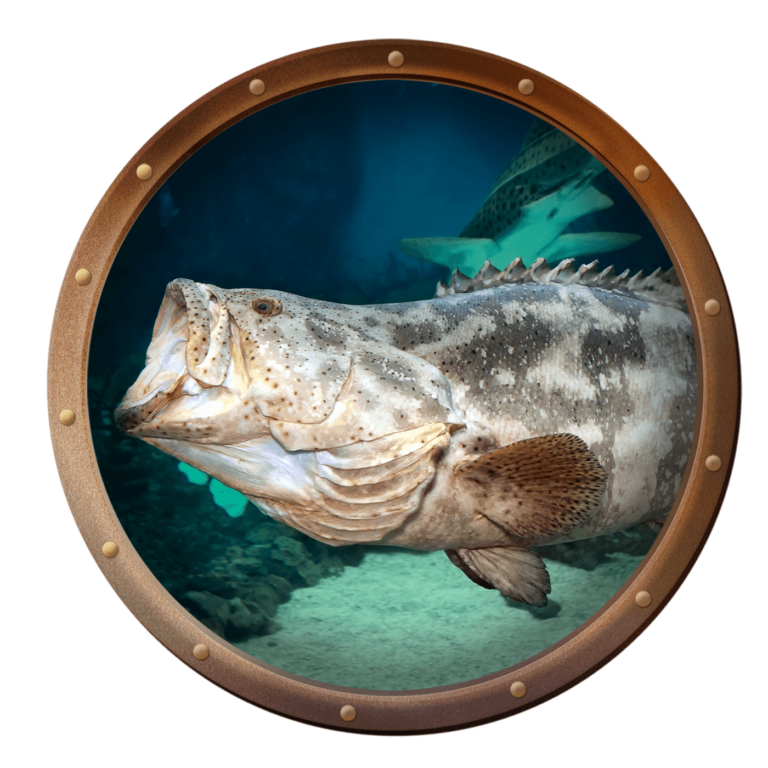
- Groupers: Large-mouthed bottom dwellers common across reef ledges, groupers are ambush predators that use camouflage to blend in with the environment. They sit and wait for prey to get close enough, then quickly open their wide jaws, creating a powerful suction that swallows their prey whole. While many local grouper species, such as the red hind, rock hind, graysby, and coney, remain relatively small, others grow significantly larger. The black grouper can reach 5 feet and 180 pounds, and the immense goliath grouper can reach lengths over 8 feet and weigh up to 800 pounds.
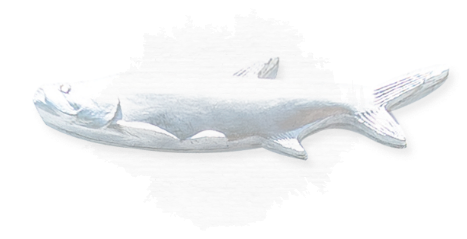
- Tarpon (“Silver King”): Prehistoric sport fish armored with thick silver scales, tarpons can survive in low-oxygen mangrove channels due to a specialized adaptation. They can gulp atmospheric air at the surface and absorb oxygen through a specialized labyrinth organ in their swim bladder.
- Commercial and Culinary Staples: Key West waters feature abundant schooling fish like the yellowtail snapper, identified by its yellow lateral stripe. Other prominent open-water species include the blunt-nosed mahi-mahi and the bottom-feeding hogfish, which uses a flexible snout to unearth invertebrates along sand flats.

- Nurse Sharks (Ginglymostoma cirratum): The most common shark species encountered in local waters. Nurse sharks have rough brown skin, rounded dorsal fins, and tactile sensory barbels near their nostrils. These nonaggressive nocturnal bottom dwellers are gregarious, frequently resting together in tight groups under reef ledges during daylight hours.
- Lemon, Reef, and Coastal Sharks: Caribbean reef sharks maintain biological balance along the outer edges and deep drop-offs of coral reefs, while larger lemon sharks (Negaprion brevirostris) enter shallow backcountry waters for hunting and breeding. Smaller bonnethead sharks inhabit local seagrass beds, while bull sharks and tiger sharks regularly navigate coastal passes.
- Stingrays and Eagle Rays: Bottom-feeding stingrays slide over soft sediments. Common species include the southern stingray and the yellow stingray (Urobatis jamaicensis), both of which bury themselves in sand to escape detection. In contrast, the spotted eagle ray is benthopelagic, spending its time swimming through the water column and descending to the seabed to feed on hard-shelled mollusks.

Mammals and Reptiles
Air-breathing vertebrates utilize protected coastal sanctuaries across the island chain for foraging and nesting.
- Sea Turtles: Five species of sea turtles inhabit marine life in the Florida Keys: loggerheads (known for their heavy jaws), greens (which feed on seagrasses), hawksbills, Kemp’s ridleys, and leatherbacks. Federal and state laws protect these reptiles, safeguarding critical beach nesting sites.
- West Indian Manatees: Slow-moving marine mammals that graze on underwater vegetation in warm, shallow canals, basins, and bays. Because manatees surface frequently to breathe air, vessel speed zones are enforced across local waterways to prevent boat collisions.
- Atlantic Bottlenose Dolphins: Social marine mammals that hunt, socialize, and nurse calves in cooperative pods throughout shallow backcountry mangrove islands.

Invertebrates
Invertebrates form the foundational bioarchitecture and substrate cleaning crews across local coastal waters.
- Queen Conch: Among the most famous of these is the queen conch, a large marine snail featuring an iconic pearlescent pink shell. Beyond its ecological role as an essential herbivore that grazes on macroalgae along seagrass beds, the snail holds tremendous historical and cultural value to Key West. Locals born on the island proudly refer to themselves as “Conchs,” and the region affectionately bears the title of the “Conch Republic.” To protect these slow-moving mollusks and support recovering populations, both commercial and recreational harvesting of queen conch remains strictly prohibited in state waters. Visitors can observe them up close at the Key West Aquarium, where they serve as gentle ambassadors in the interactive touch tank.
- Florida Spiny Lobster: Another fascinating invertebrate common to local reefs and ledge crevices is the Florida spiny lobster. Unlike the cold-water Maine lobster, the local spiny lobster entirely lacks large front crushing claws. Instead, it relies on long, rigid antennae covered in small spines to ward off predators.Spiny lobsters possess a specialized piece of soft tissue at the base of their antennae called the plectrum. They rub this plectrum against a smooth, stiff file located near their eye. A distinct rasping sound is produced as the plectrum sticks and slips while moving across the file, similar to how sound is created when a bow glides across violin strings.This acoustic signal acts as a strong deterrent against potential predators. Because this sound relies on soft tissue rather than a hard shell, the lobster can use this defense mechanism immediately after molting, when its body is soft and vulnerable. Highly sought after for their sweet tail meat, these crustaceans are carefully managed with strict harvest seasons to maintain healthy populations across South Florida.
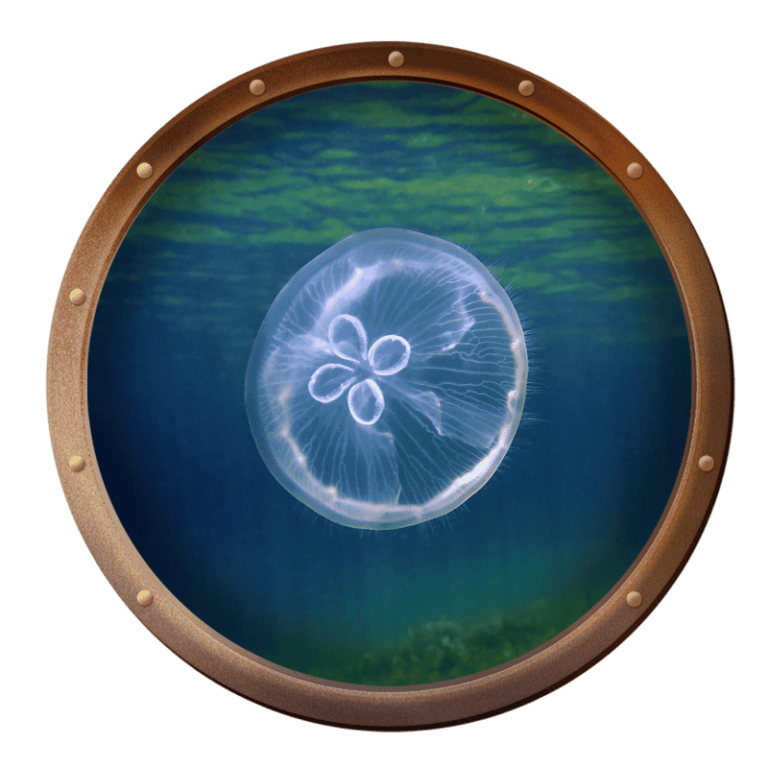
- Moon Jellyfish: Drifting gracefully through the open coastal currents, moon jellyfish offer a captivating glimpse into ancient marine life in the Florida Keys. These translucent gelatinous organisms navigate tranquil waters using pulselike muscular contractions of their bell, creating subtle pressure shifts that propel them forward. Despite their delicate structure, jellyfish are incredibly energy-efficient swimmers that help churn ocean nutrients as they move up and down the water column. Observing these simple yet remarkable creatures in motion provides an unforgettable look at the primitive organisms that have populated the oceans for hundreds of millions of years.
Environmental Conservation and Local Initiatives
Preserving marine life in the Florida Keys requires multiagency cooperation and structured habitat protection policies.
Protected Frameworks:
NOAA manages the Florida Keys National Marine Sanctuary alongside state sanctuaries and federal wildlife refuges, balancing public recreation with environmental conservation.
Active Reef Restoration:
Organizations like Mote Marine Laboratory operate offshore coral nurseries. Scientists grow fragments of staghorn, elkhorn, brain, and star corals on specialized underwater frames before outplanting them onto damaged bank reefs.
Aquarium Programs:
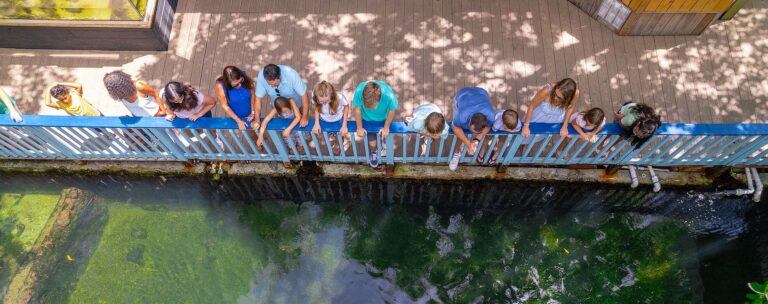
The Key West Aquarium provides long-term care for non-releasable sea turtles, featuring them as educational ambassadors. The aquarium supports regional conservation partners through fundraising, educational events, and community advocacy.
FAQs
Queen angelfish feature a distinct circular crownlike spot on their forehead filled with blue specks. Blue angelfish lack this complete ring, displaying only an unrefined blue smudge in that area.
The “Silver King” is a common nickname for the tarpon. It can breathe in low-oxygen waters by gulping atmospheric air at the surface and processing it through a specialized labyrinth organ in its swim bladder.
Florida spiny lobsters completely lack the large crushing front claws seen on Maine lobsters. Instead, they feature long, rigid, forward-facing antennae covered in defensive spines.